“Recovery is an active change in your thinking, behaviors, and ideas. It’s an active change. So, recovery is a journey. It’s not a destination.”
—Philip Cooper
People who have substance use disorders and some mental health conditions sometimes choose a recovery path to support their well-being.
Según la Administración de Servicios de Salud Mental y Abuso de Sustancias (SAMHSA), 50 million adults in the United States consider themselves to be in recovery from substance use and/or mental health disorders.
With the right support, treatment, and services, along with positive relationships and community, people can improve their physical health, emotional wellness, and overall quality of life.
The first step in recovery is reaching out for help.
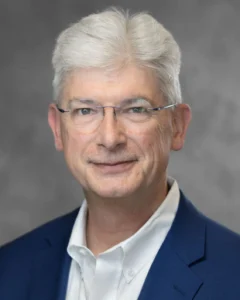
“If you want your life to change, you have to do something different,” says Bryan Hatcher, LCSW, DrPH. He is the Chief Behavioral Health Innovations Officer at Blue Ridge Health.
“If you wake up every day and do what you’ve always done, you know where that’s going to lead,” Hatcher says. “Something has to be different. Often that involves reaching out for help—sometimes professional help, but at least the help of someone who can be a partner in the journey and support you in the tough times and in the good times.”
Hatcher says truly wanting change—needing change—is a difference maker that helps the recovery process not just begin but also become effective and lasting.
“When there’s something in my life that I’m passionate about—if I need to change my life so I can be the parent that my kids need or the parent that I never had; so I can be a good partner for my partner or spouse; so I can manage a chronic physical health condition; so I can keep my job; or maybe so I can stay alive—those kind of things often give a foundation for folks to really make changes,” he says.
“I am always happy when a patient says, ‘I am sick of this. I can’t take it anymore.’ Because when you’re so sick of it that you’re not going to take it anymore, that’s the motivation to move forward with recovery and to stick with it.
“You have to take a risk with recovery. You have to be vulnerable. And you should know that it’s not going to be easy.”
Seeking help to begin recovery doesn’t always happen in the most obvious places, Hatcher says.
“Most people don’t call the mental health program or the substance use counselor,” he says. “Many people start with a friend—maybe a friend who has had similar experiences. A primary care physician is often a first step. Religious professionals are oftentimes a source of support. Folks in school will find a teacher, a coach, or a student wellness or counseling program. Folks in the workforce might start with a peer they work with, a supervisor they trust, or an organization’s employee wellness or health program.
“There’s not one best or preferred way. It’s just a matter of taking that first step and inviting someone you trust into this process with you.”
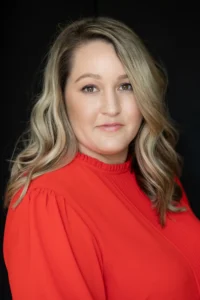
Samantha Bradley is the Western Region Director for Comunidad Sunrise para la recuperación y el bienestar. She is a Peer Support Specialist, and she serves on Vaya’s Health Equity Council.
“I like to call my own recovery my wellness journey,” says Bradley, who is a member of the Eastern Band of Cherokee Indians. “I believe we’re all on a wellness journey. The word ‘journey’ lets you know there’s no end—there’s a continuum of wellness.
“When I share who I am and what I have experienced, I’ll say I’m a person who is on a wellness journey from substances and mental health struggles. I have anxiety, and anxiety can be debilitating. It is a part of who I am, even as we try to stay away from identifying folks with their disorders.”
For Bradley, recovery—choosing it and then continuing on the journey—has been about discovering herself as much as “recovering” herself.
“For me, choosing recovery was finally doing something for myself,” she says. “For a long time, my recovery attempts were for other people—for family, for mom, for the people who really believed in me. But when I actually dove into my wellness journey, my recovery journey, I wanted to become a better person and a better community member.
“Recovery was about finding out who I actually was. With substances, there’s a lot of numbing going on. My wellness journey and recovery journey have been about finding my identity.
“So, I think the first step is stepping into your own self and starting to love who you are.”
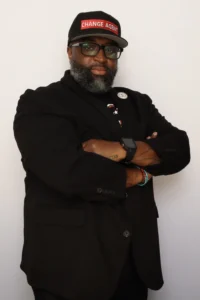
The Rev. Philip Cooper is the Chief Change Agent and Executive Director for Operación Pasarela, an organization “committed to leveraging lived experience to transform lives and reduce the stigma surrounding recovery and reentry.” Cooper is a Qualified Professional and Certified Peer Support Specialist in North Carolina. He was recognized as the 2024 Innovator of the Year by SAMHSA, and he received the 2024 Recovery Role Model Award from the Addiction Professionals of North Carolina.
“Recovery happens when we choose life over death, we choose light instead of darkness, and we choose healing over hurt,” Cooper says. “When the pain of remaining the same is greater than the pain of change, that’s when people change.
“Recovery is the act of changing our thinking, behaviors, and ideas, and our quality of life should be impacted positively by our recovery. For me, I’ve been sober almost 18 years. I got sober on January 16, 2009, and I’ve been sober since. Being someone who now gives back, you get relationships with people, too, because that’s the way we maintain our recovery.
“Recovery is about more than the drugs. Recovery is an inside job. It’s doing the inside work. It’s all about taking care of the spirit.
“Recovery looks like service. Recovery looks like gratitude. And service is gratitude in action.”
Seeking Help and Discovering What Works for You
Bradley says the help you need depends on what you want when you reach out for support.
“As a peer, I think the first steps are really identifying what your goals are and then getting connected to support and appropriate treatment with the different options, whether outpatient or residential treatment, depending on what you need and what you feel ready for,” Bradley says. “Have the courage to reach out for support and to be honest and transparent. Sometimes you have to try different options. Don’t give up.”
Bradley’s personal experience included trying different supports and treatments until she found a combination that worked well for her.
“When I started going on my wellness journey, I was trying to figure out how I fit in, not feeling like certain meetings or fellowships were what was going to work for me,” she says. “At that time, 90 meetings in 90 days was a popular solution, and I couldn’t do that.
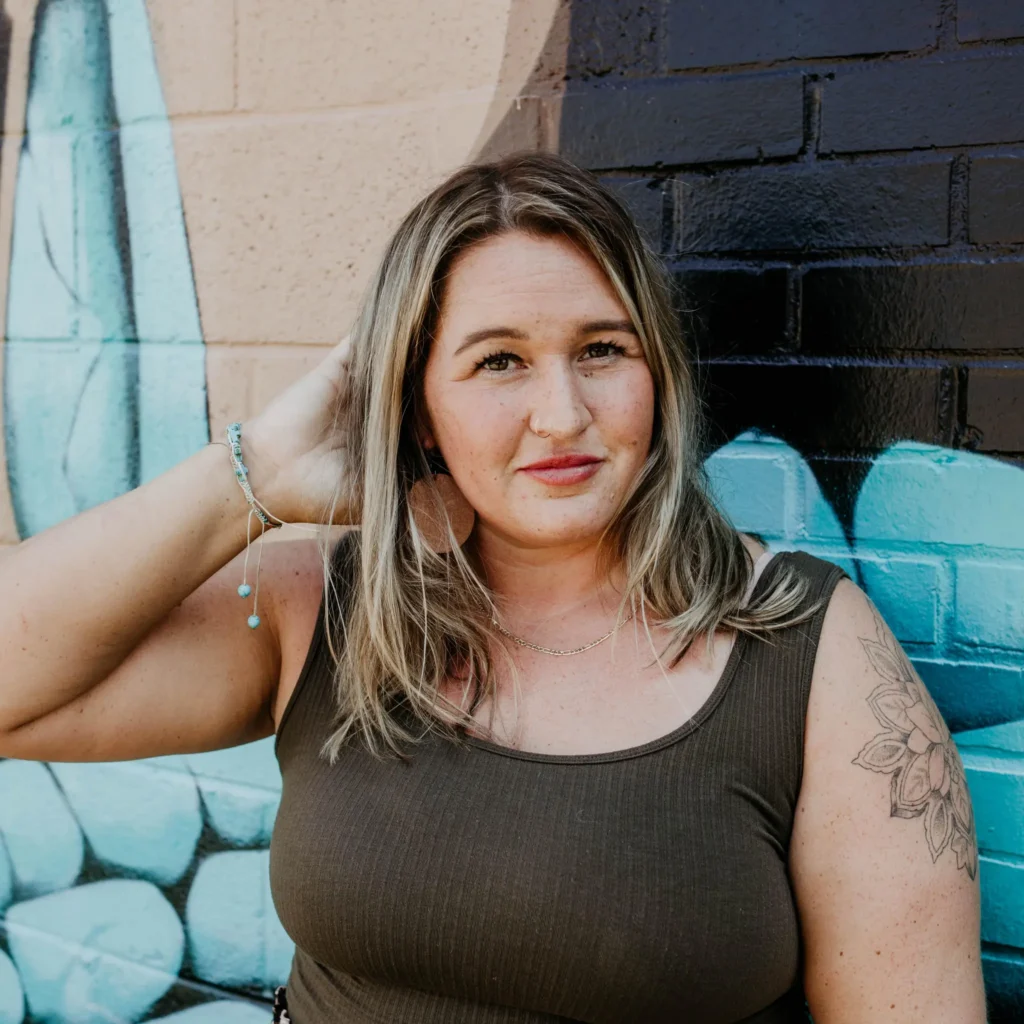
“Eventually I realized that I didn’t have to pick just one option. I started building my own wellness pathways, trying different things. What’s really cool is that even the things I don’t do now, I learned from. I utilize some of those things in my wellness toolbox.
“I am still on MOUD (medication for opioid-use disorder). For me, it’s not just about taking the medicine. It’s about showing up on time. It’s about not using my medicine incorrectly. It’s about passing my drug screens. I also do CrossFit. Exercise may not be for everyone, but that’s part of what’s worked for me. And CrossFit has helped create a whole different community that’s not related to work, where I get to talk about different things.”
“So, what I encourage people to do is find out what works for them.”
The expansion of peer supports in the care system has helped humanize the way some people see recovery services, making them more accessible and understandable. Peers offer information, connection, and support.
“Peer supports are valuable because they’re about lived experience,” Cooper says. “Peers are knowledgeable about what resources are available, and lived experience can expedite the trust level for the person who is meeting with us. Now they’re not going to hold anything back, because they know the peer support has been in their shoes. That builds confidence. Someone else knows how I roll. This person’s been vetted. They’re not playing any games.
“With peer supports, we help reduce fear about being stigmatized, because when people see peer supports who are now thriving in recovery, people start to see that it’s possible. It gives them hope.”
Hatcher agrees that the availability of peer supports has strengthened the entire recovery and wellness system.
“Peer support specialists can be an integral part of recovery for individuals who seek services,” Hatcher says. “We have better outcomes when a peer support specialist is involved in people’s care. Peers are professionally certified after receiving significant training from the state, and they have to work to maintain that certification. But their main qualification for the job is lived experience.
“They have directly dealt with addiction or a chronic mental health condition. They have been through all that and are often doing well in life, but they also understand the fluidity of that process. Just because I say I’m done with that doesn’t mean I’m actually done with that. Two or three years later there could be something that takes me right back. Peers understand those struggles existentially more than any of us can academically or intellectually.”
Life in Recovery
For Cooper, recovery is daily work, and it is filled with gifts.
“Every day I get up, I practice recovery principles,” he says. “I still go to recovery meetings, even though I feel like I’m over the drugs. I haven’t wanted to get high in a long time.
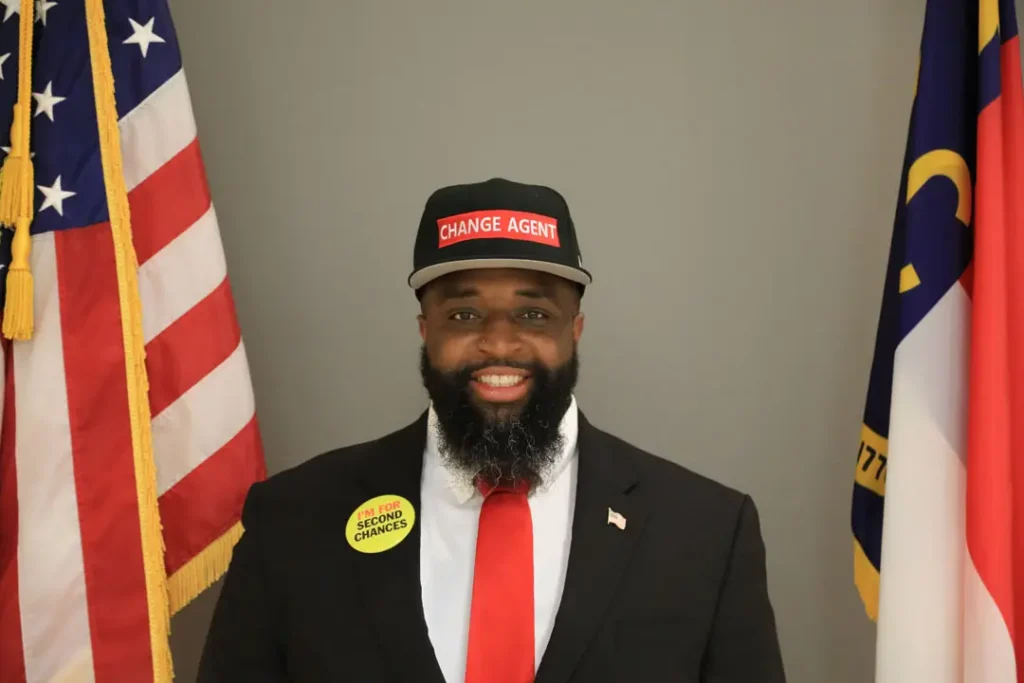
“Recovery taught me that service is important to my spiritual condition. And my blessings from recovery? My relationship with God is a blessing. I’m a minister of the Gospel of Jesus Christ. I have a wife. I have children who respect me. I have a community that trusts me and leans on me. I pay my bills. I’m a homeowner. I shake hands with public officials. I have the respect of law enforcement and of gang bangers. I haven’t been locked up in a long time. I haven’t been in jail except when I go to talk and preach or tell my testimony.
“These are all the blessings of recovery. I have a life, and my life is good.”
Recovery presents challenges, as well.
“The hardest part of recovery is losing people,” Cooper says. “I’ve seen people come and go. Being someone who now gives back, you get relationships with people, because that’s the way we maintain our recovery. But some of those people don’t continue to do what they’re supposed to do for their recovery. They start thinking they can go and test the waters again, just do a little bit or try to control it. Usually, the next thing you hear is somebody’s dead.
“People die, and that’s the hardest part of recovery—seeing people die. I’m not just talking about just when their pulse stops, either. I’m talking about whenever you see people starting to crash out. You watch them start making poor decisions. That hurts. That’s one of the hard parts about recovery to me, because I want to see everybody win. Death can be physical, but it also can be mental or spiritual.”
Cooper says it’s important for people to tend to their internal well-being as part of their recovery and wellness journey.
“No matter what a person’s religion is, they have to take care of their insides,” he says. “You can tell a person who takes care of their insides from a person who doesn’t by how they treat people—the fruit, right? If you don’t have the fruits of recovery, that’s because you’re not working on your recovery.
“Recovery looks like making the right choices on purpose with purpose. But recovery is active. It’s never over. It’s never over because the reasons that I turned to drugs as a solution in my life are deep within me.
“For some people, recovery is going to Narcotics Anonymous meetings or Alcoholics Anonymous meetings. For some people, it’s having a service commitment, where you go and give back to your community. You go and set up recovery meetings and facilitate recovery meetings.”
Cooper also says it’s important to have a strong community as part of your recovery.
“For people just now choosing recovery, what I want to tell them is find your tribe,” he says. “Find your tribe because you can’t do it alone.”
Hatcher agrees. “For many people, having social support for recovery doesn’t mean just one person,” he says. “It’s a community that is gathered around them, consisting of family, friends, and a larger social professional circle that helps people.
“Recovery is a lifelong process that is fluid in nature. It’s not a linear process, and it involves making healthy choices every day to keep moving in the direction that a person would like to move in—preferably for healthier living situations. Many times, this is related to addiction or substance use issues, but not always. I think all of us are probably in recovery from something.
“Recovery is probably going to involve letting go of some relationships, too. Sometimes the relationships we have can be part of what holds us in unhealthy patterns, either intentionally or unintentionally, and there are times when the only way to move past that is to exit a relationship.”
What recovery means in terms of support and treatment depends on the person and what they’re ready for, Hatcher says.
“We have many people who come to us and get MAT (medication-assisted treatment), and that’s great,” he says. “Some people come and get what I would call traditional psychotherapy, and that’s fine, too. And, again, I am confident that those people who have peer support specialists in their lives are probably in a more stable place—more consistently and for longer periods of time—than those who don’t have peer support specialists.
“It’s an oversimplification and there’s overlap, of course, but in the behavioral health world people find themselves in two buckets. One bucket is organic chemistry—schizophrenia, bipolar disorder, all sorts of depressions, for example. The other bucket is more life-induced by an event or a series of events, by the social determinants of health, by ACEs—adverse childhood experiences. From the life-events bucket, the recovery pattern is more often like someone struggling with an addiction, where you work through how you understand things and respond to them and just get to a healthier place, hopefully with trauma-informed care.”
Hatcher says the pathways for recovery are similar whatever the origin of someone’s challenges. Recovery involves making the choice to live a healthier life, seeking help, and being committed to ongoing wellness.
“For the people with a more organic chemical scenario—people whose chemistry is different—it’s sometimes a little harder to understand, but recovery is still the same process for everyone,” he says. “It is the process, first of all, of accepting: This is who I am as a person. Given who I am as a person, here are some things I need to be doing in order to hold the foundation of life that’s important to me and those around me.
“Sometimes it’s medication. Sometimes it’s avoiding certain stimuli, which can be anything in the world. Sometimes it’s working out every day, mindfulness—whatever it is for a person. But it starts with that key component of: This is who I am as a human being. Not that I am schizophrenic, but I am a person and schizophrenia is part of my makeup, which is not unlike saying I am a person and I have diabetes.
“For me, it’s hypertension—I am a person, and I have high blood pressure. Like it or not, that is my truth. If I take my meds, walk daily, and pay attention to what I eat, life is much better. Maybe I hate doing those things, and when I start feeling better, I quit doing them. If I have a bad back, the same thing—when I start doing my exercises, I feel better. When I feel better, I quit, and two months later, my back is out again.
“It’s the same process for everyone. It’s really about acceptance. I think that folks have to understand recovery as a process and not as an event.”
That process includes, again, both challenges and blessings, Hatcher says.
“There are hurdles that we have to step over, and once you step over the hurdle you see the next 10 hurdles that you have to manage somehow,” he says. “When you get through them, you see the next 10 hurdles, you know? Recovery is like doing that.
“I think that some of the unexpected gifts—the joys—of recovery come through the relationships that you develop. It may be with people you hadn’t known previously, and it may be with some of the same people you knew, but now because you are engaged differently in life you can experience both yourself and others differently. You might learn things about people that you never knew—about their own struggles, but also about their hopes and dreams. To me, those relationships are really the gift.”
For Bradley, working to support people in wellness and recovery is a big part of her own wellness.
“My job is a part of my journey,” she says. “What I do helps me wake up in the morning, knowing that my work can help someone. My family has been part of my journey, of course. I’ve rebuilt relationships with them. Being a mother, being a Cherokee woman—all those parts of finding my identity and my culture developed over my 10 years in recovery.
“It’s been about finding my missing pieces and filling those voids.”
Overcoming Stigma and Challenges
“I’m a marginalized Cherokee woman in a rural area,” Bradley says. “When it comes to mental health and substance use, the wellness journey is much more difficult. My identity challenges getting services. It challenges building programs. It challenges funding. It challenges growing outside of my own community. My community accepts me, so a lot of times I just want to stay in my community, because that’s where I feel safe.
“For me, I hear about what my ancestors went through—the Trail of Tears and much more—and I’ll never experience the depth of that, but we have generational trauma. We have so much working against us already that when the things happening now in the world start working against us, it just feels like kicking us when we’re down. It feels personal. It makes things more difficult—twice as hard. I grew up thinking we were way further away from racism, and now I’m realizing we’re not.
“But once I found my identity—once I found out who I was as a woman and as a Cherokee woman—and I developed what I stood for and what my morals and values were and are, it changed me.
“Finding your identity—who you are, what you believe in, and who your people are—can be a big piece of your journey. The things you do that support your identity don’t have to stay the same over the years. They can evolve and shift as you do, as you build your own wellness pathway.”
People living in rural areas often experience greater stigmatization, Bradley says, and also have greater difficulty accessing services.
“There is a lot of stigma in more rural areas, where people sometimes call people awful names, which also happens online, like in Facebook groups,” she says. “I’ve sat with parents whose children were in addiction and recovery, and the parents have used the most awful language about their kids. People on this journey can really be hurt, even by loved ones.
“Unfortunately, stigma may always be something people face. But when we look at the person we’re supporting as a human first, we can move away from stigmatizing words and thoughts and respect their preferences—including in words and language—that help support them best. We all get so much further with that.”
Language can be positive, accepting, encouraging, and inclusive, she says. And it can also cause harm.
“I don’t use words like ‘clean,’ ‘dirty,’ or even ‘relapsed’—I stick to calling people by their names,” Bradley says. “We’ve evolved in our language in so many ways. Instead of ‘relapsed,’ I like to say ‘going back to symptoms,’ because it doesn’t identify someone and call them out. For me personally, dealing with substances and mental health, if people hear ‘relapsed’ they automatically assume I’m using again. However, ‘back to symptoms’ could just be that I’m feeling really down or I’ve got overwhelming anxiety, and I just need to take a week off.
“Also, I prefer saying ‘wellness journey’—that’s what I experience and identify with—rather than ‘recovery.’ With recovery, well, I don’t know that people with substance use issues ever totally recover. Again, it’s a continuum, and it’s good to look at it that way, because if people do go back to symptoms, they don’t have to be shamed as much.
“I used to have to pick up a white chip, which in NA (Narcotics Anonymous) or AA (Alcoholics Anonymous) is a start-over. To me, that felt like embarrassment and shame. But ‘back to symptoms’ means it’s just part of the journey.
“What I’ve learned through my personal and professional experience is that the most important thing is treating everyone like a human. Too often we put people who are on their journeys, including around mental health, into boxes. Don’t identify people by their struggles. Let’s check our own biases and really understand what our biases are. Then we can support people better.”
Bradley also asks that professionals not impose their own biases on people’s goals.
“For me, if I’m supporting someone who’s at that point in their wellness journey, I’m trying to find out what they’re trying to accomplish,” she says. “For many folks, abstinence might be the goal, but we just try to reach people where they’re at. So, each approach can look different. For example, you might be doing multiple different substances, and you just want to stop using intravenously for harm reduction.
“I used opioids. I tried to get sober on my journey for more than 10 years, and at that time MOUD was very stigmatized. In all those years I wasn’t offered one of the most effective treatments in getting sober. Now, I tell my staff that if someone comes in with opioid use—say heroin or fentanyl, which we’re seeing more now, while back in the day it was more things like Percocet (oxycodone and acetaminophen tablets)—to at least offer them MOUD treatment, if they’re interested.
“For me, it was the last option given to me, and I wonder if I could have saved a lot of hard times if I had tried it first.”
Hatcher says we address stigma best by being honest and forthright about recovery.
“We address stigma by telling our stories without holding back,” he says. “I believe that when we tell the stories without reservation, people will resonate with it and get it. We must live deeper in the truth and tell our stories boldly.
“I heard someone say that if you have a chronic mental illness—say, schizophrenia or bipolar disorder—and your family has enough resources, you’re not diagnosed with a psychiatric condition. You’re considered eccentric. There’s some real truth to that. People hide it, and that becomes part of managing the stigma. We don’t want to name what’s happening.
“You can take any issue that our culture might have stigma about—be it addiction, sexual orientation, a chronic mental health condition, whatever it is—and I can promise you those same scenarios live in every family in every community. Especially when it involves those areas where stigma exists, we need to tell our truth and demonstrate how we live fully. That makes a difference.”
Hatcher also says we need to be mindful about cultural differences—respecting them and learning from them.
“I have spent most of my adult life in North Carolina, but I actually was recruited and went to Washington and worked at a large FQHC (Federally Qualified Health Center) there that sits on the Yakama Indian Reservation,” Hatcher says. “The Yakama Nation is made up of several different tribes. They had their own health service program, and the organizations had a good relationship. We could walk across the street to each other’s main offices. I learned a ton in that experience about cultures and subcultures. At least with the Yakama Nation, there’s very much a culture of caring for your own: we will do it, we know how to do it, we’ve been doing it for centuries, and we do it well.
“We had to learn how to build enough trust so that in those moments when they needed our help—traditional medical care or whatever that looked like at the time—they would reach out, and vice versa. There were times when we were so stumped we didn’t know what to do, and they usually had answers based in their traditional wisdom that took us well beyond what The New England Journal of Medicine would ever tell us.
“It really was a beautiful dance. Respecting cultural norms that are different from our own usually will enlighten those of us who think we have the answers.”
Cooper does a lot of work with people in prisons, including supporting community reentry. According to the Addiction Professionals of North Carolina, nearly 8 out of 10 people entering the prison system in North Carolina have a substance use disorder.
“The best practice for reentry is starting the services while a person is still incarcerated, within six months of their release, which includes access to the person, access to the case manager, and collaboration on the reentry plans,” Cooper says. “But you can’t do that when a prison is short-staffed—when staff is overwhelmed and barely getting by. And as a society we’re just not having enough investments in programs that do reentry services, including housing and employment programs.”
Overcoming stigma about recovery in all parts of society involves promoting education, training, and relationships, Cooper says.
“If we want to impact stigma, and stop it from making people avoid recovery, it starts with building genuine relationships,” he says. “Then, within those relationships come the education and training. People have to trust you and believe in what you bring to the table. That’s how we kill stigma—with education and with testimonials, success stories, recovery coach training, and mental health first aid training. All of that comes through education.
“We need to have resources and information readily available in places where they usually wouldn’t be—on bulletin boards, in organizational or group announcements, in churches—to help people be more recovery ready and more recovery friendly. Have the number for Vaya Health, have information about 988, have the SAMHSA website FindTreatment.gov.”
Overcoming stigma also involves being clearer about what recovery is, Cooper says.
“Misconceptions and stigma can come from people misrepresenting recovery,” he says. “I believe that harm reduction is needed and important. People need to be alive, because you can’t get into recovery if you’re dead. But we need to educate people about what the differences are, and we need to be clear that recovery doesn’t look like getting high or getting drunk.
“There are levels of harm reduction that can be considered recovery, like if somebody’s taking medication-assisted treatment for opioid use disorder. Now let’s couple that with therapy, support groups, exercise or yoga, and religion—a combination of things. We need to educate people about what recovery is and what the pathways of recovery are.
“For example, Narcotics Anonymous and Alcoholics Anonymous aren’t the only pathways. But someone may have had an unpleasant or negative experience trying something, so now they think recovery is ineffective. There’s more than one pathway to recovery.
“It’s one day at a time. We need to try what works to get to the solution for someone.”
When a person wants support to make a change and start on the recovery path, Cooper says, our healthcare system needs to be ready to respond.
“When someone is ready for help, we have a small window of time,” he says. “It’s usually only a small window of time that we have to help them—so people need access to care and recovery resources whenever they’re ready.”
Recursos
Please refer to your Member or Recipient Handbook or call Vaya Health’s Member and Recipient Service Line at 1-800-962-9003 to learn what outpatient, inpatient, crisis and residential services may be available to you.
Call 1-855-PEERS-NC (1-855-733-7762) to reach the Peer Warmline de Carolina del Norte and connect with a Peer Support Specialist.
If you are experiencing a substance use or mental health emergency, call Vaya Health’s Behavioral Health Crisis Line at 1-800-849-6127.
You can also call or text 988 to reach the 988 Línea de ayuda en caso de suicidio y crisis (for Spanish, press #2 or text AYUDA to 988).
Some other resources for help or information about recovery include:
- Blue Ridge Health Behavioral Health and Counseling
- Comunidad Sunrise para la recuperación y el bienestar
- Operación Pasarela
- FindTreatment.gov
- Addiction Professionals of North Carolina
- SAMSHA Recovery and Recovery Support
- Mental Health America Recovery and Support
- NAMI Supporting Recovery
- National Institute on Drug Abuse
- North Carolina Department of Health & Human Services