Mental health wellness is as important to a person’s overall well-being as physical wellness. Nearly a quarter—23.1 percent—of Americans have a mental illness, according to Mental Health America. Increased mental healthcare awareness, improved access to and quality of services and support, and the reduction of stigma are essential for everyone.
But for some specific demographic communities—including many racial and ethnic minorities in North Carolina and the United States—there are added barriers to receiving care for mental health and well-being.
Some of the largest American racial and ethnic minorities—including Black, Hispanic/Latino, Asian, and American Indian/Indigenous Americans—are less likely to receive mental healthcare and treatment than white Americans, according to the Substance Abuse and Mental Health Services Administration (SAMHSA). Also, multiracial people experience some of the highest rates of mental illness and perceived mental health challenges.
Many people in racial and ethnic groups have their own mental health resources and strengths in community, connection, identity, and resilience. They also sometimes have common challenges, including financial barriers to accessing care, cultural norms and sometimes stigma around mental health conditions, and therapeutic approaches and systems that were not designed with them in mind.
We asked four thoughtful, engaged leaders to speak about mental health strengths, challenges, and opportunities for increased wellness within different minority communities, across them, and in the overall population in North Carolina and the United States. We are spotlighting Asian, Black, Indigenous, and Latino/Hispanic communities here.
These four professionals work in healthcare and mental healthcare in North Carolina:
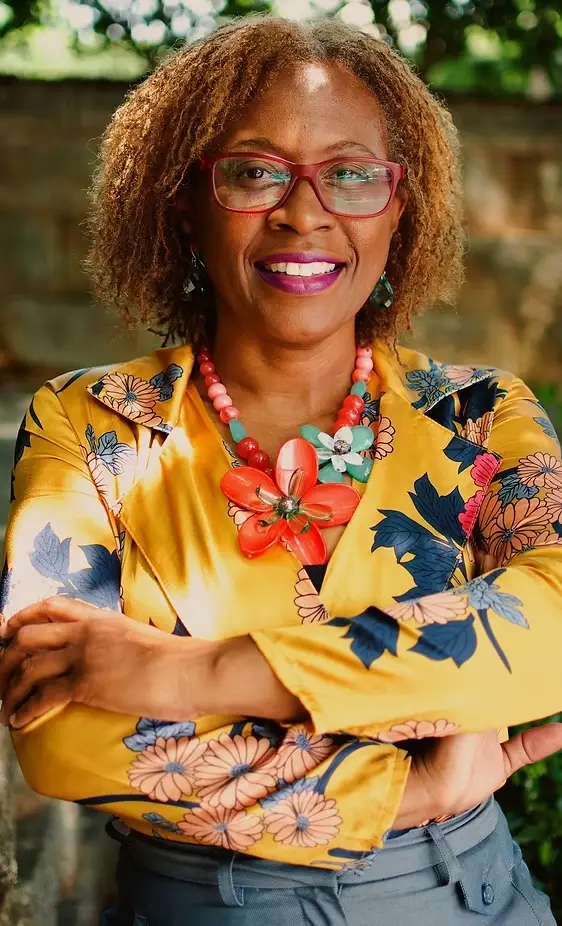
Lucretia Greaux, MSW, LCSW, is the Clinical Director and Co-Founder of Renewed Strength Counseling Services in Knightdale, N.C. She has worked with adults and children in educational, governmental, and nonprofit settings for more than 15 years.
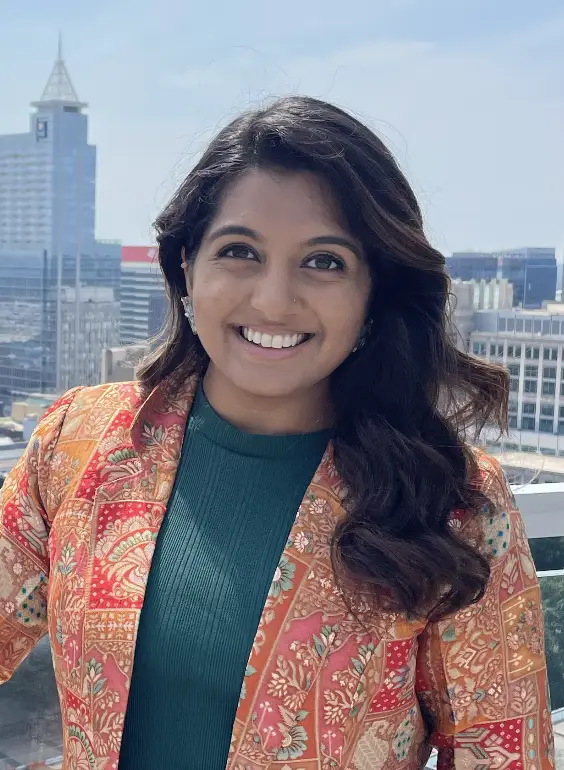
Pooja Mehta, MPH, is the Asian American Pacific Islander Community Mental Health Lead for the North Carolina Division of Mental Health, Developmental Disabilities, and Substance Use Services in the North Carolina Department of Health and Human Services (NCDHHS). She is the Director of Tarang, an initiative of NCDHHS to create open dialogue and support around mental health, substance use, and suicide for Asian Americans in North Carolina. Mehta has served on the board of directors and as Development Manager for NAMI North Carolina. A child of Indian immigrants raised in Raleigh, N.C., she holds a master’s degree in public health from Columbia University’s Mailman School of Public Health.
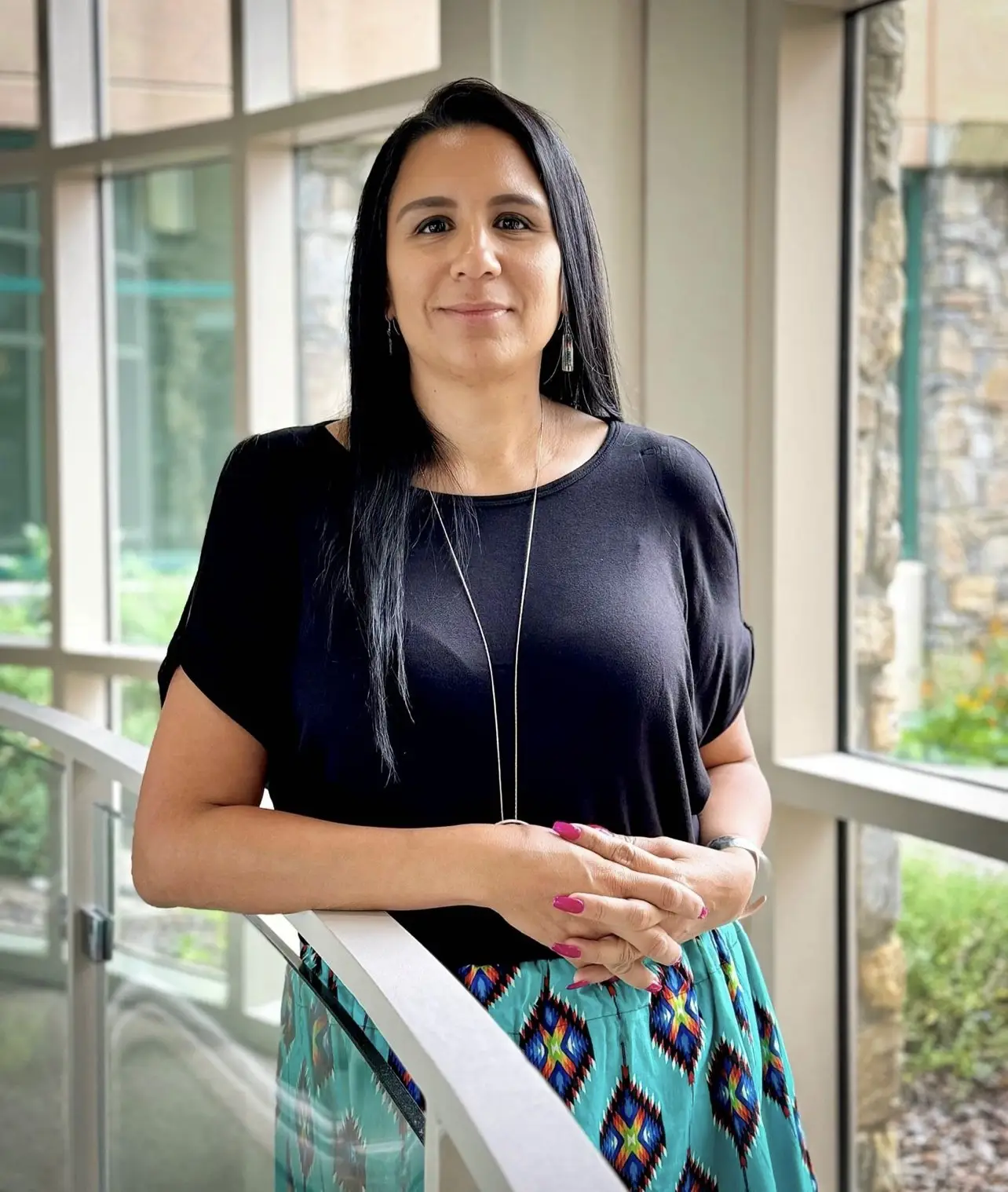
Dr. Freida Saylor is the Behavioral Health Director for the Cherokee Indian Hospital Authority. Dr. Saylor is an enrolled member of the Eastern Band of Cherokee Indians. She was born in Cherokee, N.C., where she lives with her family. Dr. Saylor is a licensed clinical social worker and a licensed clinical addiction specialist. She received a bachelor’s degree in business administration and law and a bachelor’s degree in social work from Western Carolina University, a master’s degree in social work from the University of Central Florida, and a doctorate in social work from the University of Southern California.
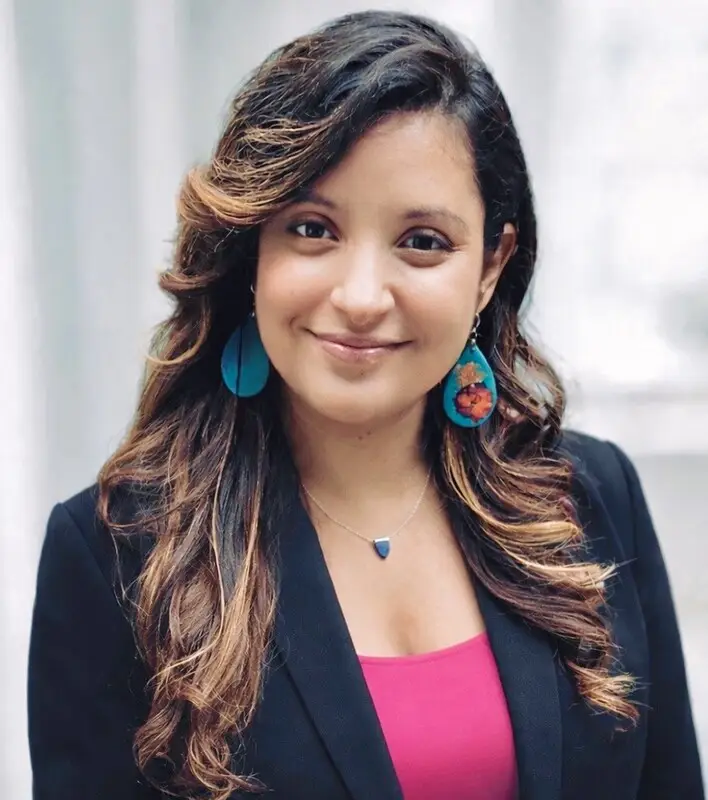
Carolina Siliceo Perez, MLAS, is the Senior Strategy and Community Partner Engagement Manager for the NCDHHS Office of Minority Health and Health Disparities. Siliceo Perez is the former Acting Director of Latinx and Hispanic Policy and Strategy for NCDHHS and the former Communications and Community Engagement Coordinator for Buncombe County, N.C.
Their invaluable insights in support of minority mental health awareness have been organized and condensed into three sections: Community Understanding and Strengths; Stigma and Culture; and Opportunities and Solutions for Mental Health and Well-Being.
Community Understanding and Strengths
Dr. Freida Saylor of Cherokee Indian Hospital Authority
Oftentimes some of the things that Indigenous people get represented as can be very stigmatizing. I really like to talk about our strengths first. So, I’d like to highlight how strong we are in community, and I’d like to think that we could speak for a lot of tribal systems of care in that. We’re not a reservation here. We are the Qualla Boundary, and there’s a distinct difference in that.
We are here as a Cherokee people for a reason. The Cherokee people are such innovators, and they’re so smart. Even back during the forced removal phase—when the Cherokee people were removed, having to walk across the country—within two years they were able to establish organizations to help ensure that the population here was going to continue, even after moving and walking out to Oklahoma. My ancestors were so smart that they developed corporations, and they developed strategies to ensure that they could get this land back here in Cherokee for those of us who live here now. They got creative using business models, because if other people had known the Cherokee people were buying these lands, they would have taken them.
So, we really have a sense of: “We’re still here.” It’s not for any other purpose. It’s very intentional that we’re here. Ensuring the prosperity of the next seven generations—even 200 years ago, that was something that Indigenous people were doing. We’re still here, and there’s such a strength in that. Now we get the opportunity to be accountable to us and to our own families.
Indigenous people really factor in community and how important that is, even though we have some challenges around mental health and a lot of historic grief and trauma around the things that happened to our previous generations and that have continued to happen today. Those things have impacted our skills base and jeopardized the strengths that we have as a community. They have taken away some of the ways that we parent, the ways that we gather food, the ways that we pull together as a community to help each other. Things like mental health disorders and substance use disorders sometimes drive a wedge in between those things and keep us from really building on our strengths as a community.
One of the important things we keep in mind is to ensure the next seven generations of the Eastern Band of Cherokee Indians. In our healthcare system, that is our goal. We have to be good stewards of the resources that we have. So, the things that we do with our elders, the things that we do with our adult population, the things that we do with the children, and even those in utero or before childbirth—we have to ensure that we’re providing the services that our community needs and that are going to lead to ensuring that we have generations down the road.
I do believe that we are our own solution. Most communities have their own solutions right in their hands and may not even realize it. Oftentimes we do look towards systems to fix things, not just in Indigenous populations but everywhere. We look at systems to fix things and that creates a reliance on systems, whether or not people trust the systems they rely on.
I really feel like health and mental health are found in the community and back with the community. So, one of my philosophies is being that solution. We are our own solution.
Lucretia Greaux of Renewed Strength Counseling Services
Our Black ancestors—how strong they were, building our own communities, pouring into our own communities. We can’t always expect for some other community to come in to take care of us. We have to get back to doing it ourselves.
But I think culturally we have been taught to be strong, especially for older generations. We had to be strong. That label of the “strong Black woman” is a label that oftentimes is stated to us in a positive way. The reality with being a strong Black woman, though, is that nobody asks, “How are you doing?”
Because in our Black communities—like in Hispanic communities—yes, we are strong. We carry so much on our backs. Sometimes we have to step into the role of being both parents. Sometimes we have to be in the role of taking care of the babies, taking care of our parents, taking care of other community members who are elderly. Through our generational traumas and our generational upbringing, we always had to be strong.
For both Black women and Black men, we care for others first, and then we don’t have what we need to care for ourselves properly. We just keep pushing through. There is that level of resilience, and I think that is a beauty of our culture—no matter what we go through, the resilient piece of us will always push us to step up. We are not going to just give up. We keep going.
But what happens if we recognize that we don’t have to struggle to increase our resilience, if we just start to acknowledge some of the things we are experiencing, if we put some boundaries in place, or if we say no sometimes. We definitely are resilient, yes, but that would help us.
Pooja Mehta of Tarang
When people think of Asian Americans, they often think of a specific identity, right? Whether it is about people who come here to get a higher education and have good-paying tech jobs or if it’s people who come here to start the Chinese restaurants or the Vietnamese nail salons or what have you. The reality is Asian Americans represent basically the highest percentile and the lowest percentile in almost every demographic category, in almost every indicator of socioeconomic status, in almost every indicator of quality of life.
Trying to find a mental health solution that addresses the needs of that top end, the bottom end, and everything in between is just impossible. We need to let that idea go. Policy people want a one-size-fits-all solution, but if you want a solution that’s going to be effective—well, that’s almost mutually exclusive.
In North Carolina alone, the Asian American population represents 100 ethnic groups and speaks 50 languages. Mental healthcare is not one size fits all. The types of challenges that groups face are not one size fits all for any group. For Asian Americans, it is particularly diverse. If you want to reach a level of accessibility for the Asian American community, you’re at minimum supporting 12 languages. That’s a lot.
Our cultures are varied. The way we speak is varied. The foods that we eat are varied. But they are not always consistent with the white American playbook. Therefore, trying to hold space for the things—the language, the values, the traditions—that resonate with you while living in this space is a constant mental game that you’re playing, a constant reminder that you have to fight to belong.
I think we live in a society and a culture where racial and ethnic minorities are seen as others.
There is the mainstream white American experience, and then anyone who doesn’t have that experience is kind of fighting to balance their experience with the white American experience. And there’s an inherent amount of mental strain that comes with that.
Carolina Siliceo Perez of the N.C. Office of Minority Health and Health Disparities
I recognize that there’s a place for resilience in thinking about the Latine/x population. But the idea of resilience shouldn’t ever be used as a way not to support a population. Often, we frame immigrant communities as very resilient. That doesn’t mean they don’t need and deserve tailored services and support. It doesn’t mean healthcare systems shouldn’t become more culturally responsive and inclusive.
Latine/x and immigrant parents are seeking a tremendous amount of support and resources, especially with the threat and fear of family separation impacting youth right now. Latine/x families are often a source of emotional support and encouragement. I’m sometimes surprised that parents recognize the need to seek support for their youth and children, but maybe they haven’t recognized the need for mental health support for themselves.
Family members also may unintentionally discourage conversations because of stigma, generational trauma, or generational beliefs about mental health services and therapy. There also are concerns with privacy—what is going to be shared about an immigration status that shouldn’t be shared?—but it’s so important for people to be able to share in a way that really creates context for the way mental health services need to be delivered, because that happens in the context of fear of family separation, fear about government services, and even the fear of having to leave one’s home.
Let’s say you’ve got youth now who may be wanting to go to college. Especially in rural communities in North Carolina, they may not feel comfortable leaving right now. Maybe they are the only person in their family that drives or can interact with services. The children are the only ones who are able to navigate a system—whether that be linguistically or culturally—because they’ve become more acclimated with the system and the process for seeking help. But this creates additional mental health burdens on them, too. I grew up in a family that needed me to be that person.
Stigma and Culture
Lucretia Greaux of Renewed Strength Counseling Services
We’ve been told for generations: We don’t talk about that outside the home. We don’t take that out into the community.
Because of that, in the past a lot of our Black elders carried a lot of trauma and never spoke about it. As a result, we learned that it was okay to live with trauma and go through hard things. Then we started creating our own trauma among ourselves.
There are still families who don’t believe in therapy. They don’t believe that your depression is a direct result of a traumatic experience that you’ve had. They still believe that in the Black community we don’t talk about those things—the childhood traumas, the ACEs (Adverse Childhood Experiences) that can include abuse or incest, all of these different things. We have been taught to keep quiet. We don’t talk about it.
But those things also impact us as adults. We think we’re protecting ourselves, but we’re not realizing that we’re really hurting. When I have a person having a lot of medical problems, are there things that we can trace back to their childhood experiences, where that cortisol and all of that trauma and the stress of everything have deteriorated their ability to grow and be healthy? Or do they start engaging in risky behaviors?
We need to reduce the stigma about mental health that says there’s something wrong with me.
We also need to understand that some things are rooted within us culturally. They are tied to some of our fears and some of our anxieties. When we see things on TV, on the world stage, the witness of certain things makes us feel it and go through it. Many of my clients say they get mad when they see something on TV. They internalize it.
Race definitely impacts the self-esteem of our young people, It’s hard on our young people. It starts in our schools, where race becomes one of those things where people assume that because you’re Black, you don’t have the ability or that you won’t behave. When our young people are out in stores, they’re profiled. Some of the sources around becoming angry sometimes start there, with that discrimination—and that often leads to increased anxiety and increased depression.
Dr. Freida Saylor of Cherokee Indian Hospital Authority
Just like in the greater population, we have stigma around our mental health. In many Indigenous populations and tribal communities, we don’t always trust systems. There is good reason for that, right? There is good reason for not trusting systems, because systems have done harm to us in the past.
There are a lot of misconceptions about Indigenous populations and even our population here in Cherokee, including that everybody struggles with substance use and alcohol misuse. That’s one that I hear a lot, but I’m not clear that it’s true in terms of the overall population, at least any more than it is in other populations.
But with any progression of life, things that are challenging a current population are sometimes handed down to younger generations. Not to overgeneralize, but for our youth and for the whole country, the country is dealing with a lot, right? So, there are mental health issues and concerns about increased substance use. We really need to help our youth find ways to cope—healthy mechanisms, as opposed to doing so through substances or it coming out as trauma or through mental health issues now or later down the road. We need to make sure that there are opportunities to have positive reinforcement with supports and services in their lives.
We have a program where we actually bring adults through to look at their trauma—look at the things that they’ve experienced as children that then affect their choices today or in the past and also how other people experience them. It’s really important that we provide them the opportunity and a safe place for it.
So, we use something as simple as—and as powerful as—words and stories from our own members, our own community. Then they can see that many of us, including me, weren’t born with a golden spoon in their mouth, and also that healing is possible, despite all the challenges that they have had in their lives.
Carolina Siliceo Perez of the N.C. Office of Minority Health and Health Disparities
One of the strongest misconceptions I run into within the Latine/x community is that mental health needs and challenges are a weakness. There’s stigma around talking about mental health.
Currently, the Latine/x and Hispanic community is under a lot of stress. We need to remind folks that seeking support isn’t a sign of weakness. It is a sign of strength and humility. It is a sign of recognizing that we are holding a lot, and we are doing as much as we can to thrive. But in order to do that sometimes we need help, and that’s okay.
It’s okay to ask for help, and it’s also okay to ask for help that is appropriate for you. We have a right to ask for an interpreter. We have a right to say, “You know what, this interpreter is not working for me.” I think we forget that.
I think we forget that we are entitled to live with the dignity and care that we need. You deserve to live in a way that feels safe, and you deserve to access mental health services, well-being, and safety, regardless of where you live, your socioeconomic status, and your immigration or refugee status.
I think the greatest misconception from others about mental health and the Latine/x community is assuming that we’re a monolith. Then people assume that just having a virtual interpreter in the room is going to create a safe and trusting space for an individual to really be able to explain values, family dynamics, migration experience, isolation, sometimes aggravated and complex situations, and the entire cultural connotation and context.
We really need to think about equity versus compliance when it comes to creating a space that can hold these realities and really work to support someone’s emotional and mental well-being.
Another cultural misconception is the understanding of the word “crisis” for a crisis line or crisis services. Someone thinks, “Well, I’m not suicidal.” We can do a better job helping people understand that a crisis is as one defines it. A crisis can be something adding a burden to your day-to-day life, impeding your ability to experience joy and to thrive, or impeding your ability to work or function in your daily activities.
What’s interesting about policy recommendations for any minority-based group is how much commonality there is among groups. There’s a lot of overlap in thinking about stigma and raising awareness around mental health needs and support. There’s a lot of intersection in the way stigma keeps people from speaking up about needing support and services and the lack of culturally tailored spaces to provide mental health support. There’s the lack of health insurance and concerns with affordability. And there’s the limited availability of providers, particularly in rural communities.
Pooja Mehta of Tarang
One of the biggest things that I hear over and over again from the Asian American community is that mental health is not part of our language and it’s not part of our culture.
Well, it’s not part of our language, but it is absolutely part of our culture. A lot of proximate wellness services emphasize things like the mind-body connection, the brain-gut connection, and self-care and wellness practices to maintain your mental health before the point of crisis. Most of that comes from Asian culture in some way or another.
So, both within the community and outside of it, let’s stop saying that mental health is not part of Asian American culture. Mental health has been effectively colonized to the point that we think it’s not part of our culture, and we can’t see ourselves represented in it. Well, do you have the audacity to look at me and say mental health is not part of our culture when we literally invented yoga? I think we miss that.
Tarang hosted a community care lounge at the Common Roots Festival where we specifically brought in workshop facilitators for people to lead whatever practice they do and learn how to tie it back to mental health. Doing more of that allows both our community members and also the general public to understand better that mental health is inherently part of Asian culture. It just looks a little different.
The main barrier to Asians seeking mental healthcare is the lack of representation in the mental health space—not seeing yourself represented in the demographic of people who are seeking help and also not seeing yourself represented in the demographic of people who are providing help. I think there is this notion that we can’t be part of the mental healthcare system because we don’t see ourselves in it. Then, because we don’t see ourselves in it, we don’t choose to be a part of it. It becomes kind of like a continuous selecting circle.
Now, are there barriers in all sorts of other ways? Yes, but I don’t think any of those barriers are going to be adequately addressed until we have representative voices in the rooms that are trying to address them. In order to do that, we have to choose to be in those rooms. We have to fight to be in those rooms to address issues like access, language, and resource allocation.
Opportunities and Solutions for Mental Health and Well-Being
Carolina Siliceo Perez of the N.C. Office of Minority Health and Health Disparities
With the level of crisis so many Latine/x people are experiencing, mental health can’t just be about diagnoses and treatment. It has to be about creating spaces where individuals feel connected, supported, and understood. Being able to communicate in your preferred language is an important aspect of that.
There’s an increasing need now for group conversations and even group therapy, because what we’re hearing from different community groups is that it’s reducing the stigma and helping the conversation really start around mental health. So, often what we’re seeing is groups that are perhaps having conversations at church. Latine/x groups going to a Zumba class or a karaoke event, or people going to a salsa event. We seek a sense of belonging, and that means places where we are feeling seen and supported—places where you can have interaction and solidarity, where you can forget all the different stressors that you may be holding and carrying in your day to day, so you have the opportunity to build social rapport within the community and with your neighbors.
We need to think about making mental health connections in nontraditional settings: in the fields for farm workers, in community centers, and at soccer games, schools, churches, and food banks. So, we must strengthen partnerships between healthcare systems and community organizations and honor the need for spaces that provide ways to connect and engage through food, through language, through music, and through art.
How do healthcare systems become more culturally responsive and inclusive? I think it’s by understanding how communities experience well-being. So, be sure to provide food and childcare in the spaces that you are inviting Latine/x people to partake in. Understand the socioeconomic burdens, the layered barriers to care like transportation and childcare. Does somebody have to decide whether they’re going to seek mental health services or cook and have dinner ready on the table? All of these things are important.
As you begin to engage and build partnerships with different immigrant communities, you’re going to often be welcomed into their spaces, sometimes through a faith-based context or another culturally relevant context, whether that’s through a community-based organization that is helping them learn English or that has a computer lab where they’re learning how to use a computer.
Also, we need to increase the recruitment and retention of bilingual and bicultural providers and invest in qualified medical interpreters who are trauma informed. We need to make sure materials to access services are available in plain language and in as many languages as possible.
With women, youth, and recent arrivals, we are increasingly seeing traumatic incidents as part of the migrating experience. It is challenging to find someone who is well-versed in these challenges and who can culturally tailor their services to understand those needs, particularly in rural communities, where there are already challenges in accessing services due to insurance or transportation needs.
I envision mental healthcare that is culturally responsive, community informed, trauma informed, and rooted in dignity and cultural humility. Because once we understand the individual—we understand who they are, where they’re from, and where they want to be—then maybe we can really create the personalized care that they need.
Pooja Mehta of Tarang
A lot of immigrant cultures—and Asian Americans especially—are very communally oriented. Family ties, community obligations, social hierarchies—those are pretty consistently important across Asian cultures. But a lot of mental healthcare and substance use recovery systems come from an individualistic mindset in the United States.
There’s almost this belief or perception that in order to take care of your mental health, you have to abandon these very fundamental parts of your identity and your culture. I don’t think that’s how it has to be. We are now seeing immense success in communal—community-based—interventions and things like peer support and social interventions.
If someone is really struggling, we probably say go to an inpatient facility, not a community support group, right? But for our people, a community support group is more likely to provide positive results than being isolated from your community and being told to set boundaries.
When I’m talking about these community interventions, these traditional interventions, a big question I run up against is: “Well, is it clinically validated? Has it been proven?” I think if there is a way to introduce nonconventional practices in a way that they can still be reimbursed, that would be important. Can we do a research study to see if something is effective?
Just to give you an example: in South Asian culture, communal singing and bhajans, kirtans, and Qawwalis—that’s a huge part of our culture. The mental health benefits of those are palpable if you have ever been in one of those rooms—the community aspect as well as the singing. But I doubt that you will find a paper saying that this is a clinically validated mental health intervention. It’s probably not, because no one has ever cared to invest in it. The community hasn’t advocated for that to be researched, and nobody external to the community is like, “Oh, singing can be part of mental health!”
So, from a healthcare systems perspective, I say we should listen to the community, watch the community, hear the community, and be willing to get out of our comfort zone around mental health support. Some of it might not work and might just fall flat, right? But a lot of it will be effective if you’re leading it in a way that is centered in the community. If nothing else, you’re at least opening the door for the community to be in the spaces that you’re providing.
I will consider myself as being successful in this work when Asian Americans feel that they have the comfort and the language to go into their community spaces and express issues that they are dealing with around mental health, substance use, and suicide—that they trust that the community members and partners they are speaking with can meet them with care and compassion and hold their hand in finding resources.
Lucretia Greaux of Renewed Strength Counseling Services
We are all equal and all deserving of having culturally competent programs, and we need to talk and share more about mental health. Mental health doesn’t always look like people think.
There are false beliefs that a person who has a mental health issue looks a certain way. But mental health is also in the boardroom. Doctors, lawyers, therapists—we all may need support. It’s just easier for us to afford it. So, the belief that Black and Brown people have more mental health issues, we know that’s not true. We just don’t have the finances and resources to support our community in that way that our counterparts do.
We need to continue to encourage more people of color to go into this field of therapy and supporting mental health, because the barriers to full access are financial but also involve a lack of culturally competent therapists who can understand my experience in a Black home—the cultural differences about how we live, how we respond and react, and what our norms are. I think part of that is the challenge of finding someone who will understand my plight with a level of warmth and understanding—finding a connection where you can build a rapport with someone who can hear you, understand you, and not feel judgment.
What is beautiful is what we’re seeing in the Black churches, where you are part of a community in which the leaders are now saying, “Hey, go take care of yourself,” Some are actually having presentations at their churches about mental health and also physical health, because they affect each other. When I’m not okay mentally, that stress level is going to increase my physical health issues. We need more than just our faith—trusting and believing that God will take care of us and support us and show us the way.
So, I think the community coming together collectively is very important, building more partnerships with the colleges, the schools, the churches. We need to start to build our future with the understanding that mental health does matter. We need to work with school systems—getting to our young people early to help them learn to be more open, so they are able to say, hey, I feel a sense of sadness or there are things that are making me feel anxious.
We need to have more education and open dialogue talking about mental health and educating people about what it looks like, how depression shows up in different ways, how anxiety shows up in different ways, and how capacity and resiliency levels can be factors in how well I will or won’t manage it.
I think we also need to have more conversations about what modalities are the best fit for people who need support. Everything isn’t going to be about talk. Sometimes nonverbal modalities—like play therapy, sandtray therapy, somatic therapy—can be more helpful, especially with the younger population and even with some older adults. Sometimes a therapy session can be doing artwork, and you can still help a client remove a blockage they’ve been dealing with. I think that’s a fear—that I have to go in and all we do is talk. That can be intimidating. We can use different tools to move and shift some of this energy and help support people.
Mental healthcare needs to be a part of who we are. A part of who we are doesn’t mean that we have a problem. It just means that taking care of ourselves also means taking care of ourselves emotionally.
Dr. Freida Saylor of Cherokee Indian Hospital Authority
We don’t have a lot of external providers that come here without being invited and without great purpose. If we’re bringing people or providers in here, it’s very key and pivotal to spend the time it takes to build trust with the community as partners.
We are not going to be the solution for everyone, but oftentimes a healthcare system does become the solution for a lot of things, because there are just not a lot of other options. I would love it if we had more grassroots nonprofits home grown, if you will, with our own members doing some of the services that we need. So that we don’t need the healthcare system to get into transportation, to become housing landlords, you know? We do get the blessing of doing that for our community when we need to be the solution, and it makes sense. Then we become that.
I really like to honor the autonomy of choice with our individuals and not be as paternalistic as systems have been in the past. That’s usually my approach—to let people be their own solution. We’re here to help and guide them along the way, but until they’re ready, we can’t do that, right? We have a lot of individuals who sometimes may not always be at a stage where they’re ready for change or treatment and for us to walk alongside them in that. I’m okay with that. I say, well, come back when you are—we will be here when you are ready.
I think understanding more about Indigenous populations that are in your space—in your state or in your area—is really important. Understanding the history and how that history impacts someone’s ability to engage in their own mental healthcare or care in general. Visiting an Indigenous community is a start for healthcare workers.
Healthcare workers sometimes ask, “How does cultural competency work?” And I say it’s more about cultural humility. Cultural humility is the term I like to use, because a lot of things can be similar in the strengths and needs in different Indigenous communities. But they need to learn and understand that, even if you are from this community, like if you’re an enrolled member here, you may not have grown up here and there still may be distinct differences.
So, be humble. Listen.
If you’re coming in to work with the Cherokee population or any Indigenous population, a lot of times coming into a closed system, it is important to make sure you show up as who you are. Be real with people. Be genuine.
We say ᎤᏩᏒᎤᏓᏅᏖᎸ (U wa shv u da nv te lv, pronounced oo wa shuh oo da nuh tay luh). “The one that helps from the heart” is one of our guiding principles here at Cherokee Indian Hospital Authority.
We don’t care what you know until we know that you care. To me, that is pivotal in building relationship and building trust with the communities that have been harmed by systems.
Resources
Here are resources, help lines, and additional information for mental health information and support. If you feel you are experiencing a mental health emergency, you can call Vaya Health’s Behavioral Health Crisis Line at 1-800-849-6127.
Vaya Mental Health Services: call the Member and Recipient Service Line at 1-800-962-9003
988 Suicide & Crisis Lifeline: call or text 988 (for Spanish, press #2 to reach the Spanish-language line, text “AYUDA” to 988, or chat in Spanish)
North Carolina Peer Warmline: call 1-855-PEERS-NC (talk to a peer support specialist)
NAMI North Carolina: call the NAMI NC Helpline at 1-800-451-9682, text 919-999-6527, or email helpline@naminc.org
Call BlackLine: call or text 1-800-604-5841
Mental Health America BIPOC Mental Health resources (includes toolkits in English and Spanish)
North Carolina Immigrant Mental Health Solidarity Network
Hispanic/Latino Behavioral Health Center of Excellence
National Latino Behavioral Health Association
Indian Health Service: Resources for the Healing Process
The Trevor Project Support Line for LGBTQ+ youth
N.C. Office of Minority Health and Health Disparities
National Alliance on Mental Illness (NAMI)
Substance Abuse and Mental Health Services Administration (SAMHSA)
National Institute of Mental Health (NIMH)
North Carolina Division of Mental Health, Developmental Disabilities, and Substance Use Services