In April–Autism Acceptance Month–and year-round, Vaya Health is very pleased to recognize and celebrate the autism community, our autistic members, and all autistic people in North Carolina and across the country.
Tracey Sheriff is the Chief Executive Officer of the Autism Society of North Carolina (ASNC).
“Autism awareness and acceptance are vital to helping people understand autism,” he says. “With understanding comes the acceptance and appreciation that ensures autistic individuals and their families feel truly welcome.
“People with autism have so much to offer and teach us. By choosing to include and engage with autistic individuals, we don’t just improve their lives, we enrich all our lives and communities.”
The diagnostic prevalence of autism in the United States has increased to about 1 in 31 children, according to the U.S. Centers for Disease Control and Prevention (CDC). The CDC reports that 40 percent of these autistic children have a co-occurring intellectual disability.
Autistic children become autistic adults. Autism acceptance is about support, understanding, and inclusion for autistic people across the lifespan.
“During Autism Acceptance Month, we reaffirm our commitment to ensuring that people with autism have access to the appropriate services, supports, and resources they need to thrive,” says North Carolina Health and Human Services Secretary Dev Sangvai. “At the North Carolina Department of Health and Human Services, we are working to build a system of care that is responsive, inclusive, focused on quality, and centered on the needs of individuals and families across our state.”
We were pleased to have an in-depth conversation with autistic advocate Jade McWilliams about how people can better realize values of genuine autism acceptance.
Jade is the recipient of an Empowering Hope Award from NC TIDE and an Impact Award from Tzedek Social Justice Fund. They have made presentations at numerous conferences, including the Hub for Autism and Neurodiversity conference at Appalachian State University and the Autism and the Pursuit of Happiness conference at the University of North Carolina Asheville. Jade has served on autistic-adult panels at several colleges and universities, as well as for TEACCH Autism Program and the Side by Side program of the Division of Mental Health, Developmental Disabilities, and Substance Use Recovery Services at the North Carolina Department of Health and Human Services. They live in Buncombe County, North Carolina.
To learn more about autism acceptance, visit the resource pages of the Autism Society of North Carolina and the CDC.
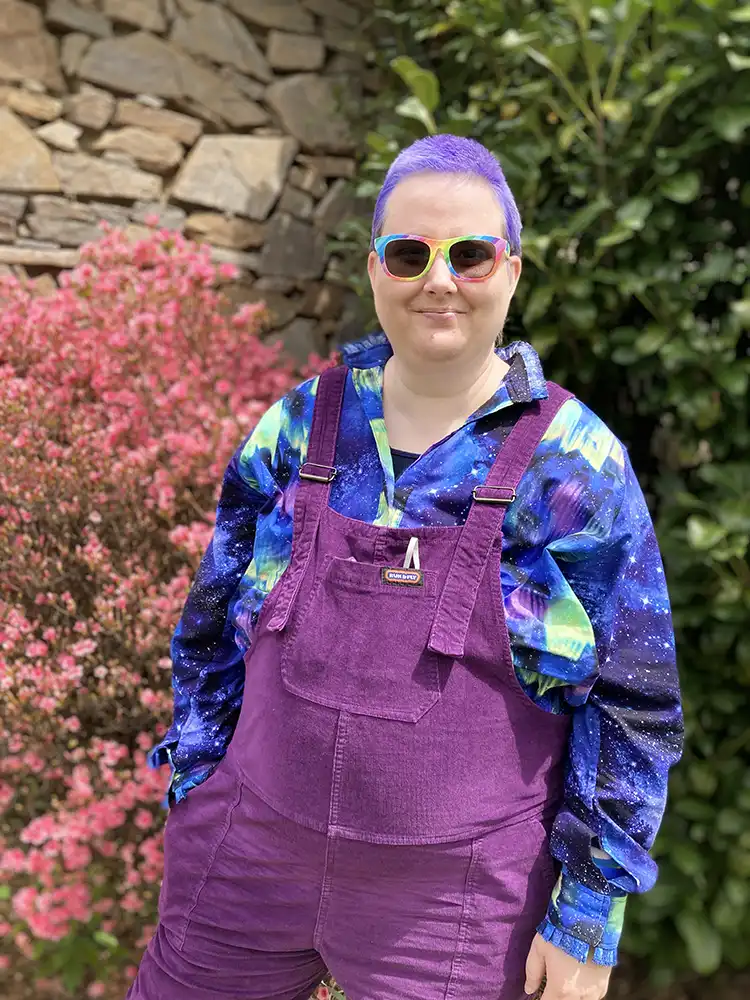
Q&A with Jade McWilliams
Jade, what is autism acceptance?
Autism acceptance is about creating a world where there is space for many different ways of being.
Autistic people are often thought about as being odd or strange. Autism acceptance means making room for our many differences without judgment and also accommodating different needs without stigma.
Why is Autism Acceptance Month in April important?
We assign a month to causes and campaigns that need more public awareness—to things that a lot of people could benefit from knowing more about. Having Autism Acceptance Month in April signifies autism as being an important topic that people should learn more about, especially because more and more people now know that they have an autistic person in their life—or that they are autistic.
I would say not enough people know enough about autism, though. Everyone is impacted by autism in some way. There’s more awareness—I think because of the increase in autism diagnosis and known prevalence. We are very rapidly realizing that autism is a lot more common than we used to think.
People benefit from having knowledge about the autistic people in their community and in their lives. So, awareness is still an important goal.
The acceptance part is very important for moving the world closer to a place where everyone is included, with autistic people included just like everyone else.
Let’s talk about why autism acceptance can make a positive difference for autistic people, starting with the parents and family members of a child receiving an autism diagnosis. What difference do you think it makes for an autistic child or adult to have their family or caregivers be accepting of autism upon diagnosis—and then to continue that acceptance throughout their lives?
Receiving any diagnosis for a child can be hard. Receiving a diagnosis of autism is often really hard for parents, and I want to acknowledge that.
But I think it’s less scary when there is an accepting attitude in society around autism. When parents have less fear and more understanding from the beginning, then they’re in a better position to support their child.
An autistic child who grows up in a culture of acceptance, including in their family, has an easier time developing positive self-understanding, making friends, and developing resilience. As that child becomes an adult, they are better equipped to self-advocate at school, at work, with their friends, and in their community.
That benefits everyone. A more accepting community gets to experience the gifts of more of its members.
How about for professionals delivering support therapies or working in provider agencies or even for teachers in schools—what looks different in working with an autistic child or adult with a perspective and framework of autism acceptance?
One of the most important things for professionals working with autistic children or adults is to create partnerships of mutual respect.
That respect signifies that the professional knows from the beginning that the autistic person is not broken or incapable of learning.
Instead, the professional is meeting the autistic person where they are and helping them learn to navigate the world. I think this is what so many autistic people—myself included—need.
In the past, autism was commonly viewed as something that had to be eliminated, fixed, or cured. Autistic people were thought of as less feeling, less experiencing, or even less human.
The spread of autism acceptance has helped shift and lessen these harmful, misguided beliefs.
I ask people to think about how difficult your life would be if you had been made to feel broken inside—and that message was reinforced every day of your life. That understanding of yourself would seep into everything, including your self-esteem. That’s how a life without acceptance feels.
Autism acceptance is a strong tool to challenge and change such hurtful narratives, including among professionals.
Thinking more broadly about society, what needs to happen, do you think, for autism acceptance to become the norm?
There are many practical changes that can help make the world more manageable for autistic people.
Stores can have quieter or less stimulating times for autistic people to shop. Social groups can operate with an understanding that some people need to move around more than others. Family members or friends can learn that some autistic people can understand communication better when they aren’t making eye contact or when they’re repeating back things said to them, which is called echolalia.
In the workplace, accommodations can sometimes be quite simple and inexpensive. They also often create a better working environment for nonautistic employees, with things like making better use of schedules and calendars, having sensory breaks during meetings, or allowing the use of fidget toys.
Looking at the bigger picture, as a society we still need to change people’s hearts and minds about autism. I do think that as practical changes become more common, they help to reshape norms about what is acceptable.
So, often people gaining understanding, awareness, and exposure about autism is what helps them to become more accepting, more tolerant, and more comfortable with differences.
Do you think the distinction between autism awareness and autism acceptance campaigns is an important one? Many autistic advocates argue that most people know about autism—they have awareness that autism exists—but it’s the acceptance part that’s lacking.
More than ever, we are siloed off into our own little communities. We are spoon-fed information by AI and algorithms. We see more and more articles that are tailored to our interests—and that often really anger us.
So, I don’t blame some autistic people for thinking there’s more awareness around autism than I think there is. I don’t think genuine awareness and understanding about autism are common today, even while they’re more common than they were in the past.
I think awareness is still as important a component as acceptance. You cannot build acceptance without awareness and understanding.
Awareness and acceptance are important because it is wrong and unfair to expect human beings to do things they can’t do or try to mold themselves into something that’s impossible for them, like for an autistic person to try to be nonautistic.
That would be bad for anyone, because people are who they are.
How important is it, then, for autistic people—for autistic children and for autistic adults—to accept autism as a foundational part of who they are?
Autism acceptance is very important for autistic people. It’s especially important when you consider what the competing narratives about autism are and have been.
All people need shelter from the attacks and abuse we inevitably encounter as we journey through life. Some ways of being get targeted and vilified more than others. Autism is often one such target.
Autism acceptance is a kind of armor that autistic people can develop against bullying, struggles, and misunderstandings. It builds identity, and it builds resilience.
The thing about hard or difficult times is that they are unavoidable. Certainly I have felt—and encountered other autistic people who have felt—it’s really a struggle to find that self-acceptance at times, especially when people are experiencing extreme loneliness or bullying.
At those times it can be easy to feel like you just want to be normal or you just want to be fixed. You just want to be like everyone else.
I think it’s fair to say that most autistic people experience those feelings at some point, which is why developing acceptance is so important.
For you, personally, what does autism acceptance sometimes look and feel like? And what is autism rejection like for you, Jade?
I experience autism acceptance when people allow me space and quiet when I’m overwhelmed or need processing time, when they show appreciation for my special interests, when they aren’t offended when I struggle and take a lot of time to reply to text messages, and when they draw a self-portrait card for my visual schedule.
I feel rejected when people question my ability to make decisions for myself, when they call the toys and things that I love childish, or when they make comments about what I eat, such as eating the same safe foods.
I feel rejected when people are embarrassed by me simply being myself—when I’m stimming, get confused, or say the wrong thing.
I feel very lucky to have a strong, close community of people with whom I feel very accepted. It has made all the difference in the world. I sort of mark time by the time before this happened in my life and now, the time when I have it.
So, in addition to self-acceptance, acceptance by others and by community is wonderful and necessary.
Everyone—autistic people included—needs at least one person in their life who is safe, loving, and accepting.
What are common misconceptions about autism and autistic people?
There are so many misconceptions that I could list them all day: That there’s a cure for autism. That there haven’t always been autistic people. That autistic people can become unautistic or nonautistic.
That autistic traits aren’t actually just normal human traits experienced in different intensities, but that they instead are something else, something other or foreign. That autistic people exist and live in a different world. That there is a trapped “normal” person inside each autistic person.
That every autistic person has some kind of special savant skill, like card counting or calendar calculation. That there is one simple thing that causes autism—like vaccines or Tylenol or video games or whatever—rather than autism just being a natural expression of human diversity.
Beyond all of that, as the common saying goes, if you’ve met one autistic person, you’ve met one autistic person. Part of what makes this saying true is that autistic folks are extremely diverse with many additional important individual traits, identities, and co-diagnoses.
Intersecting factors—like race, class, gender identity, immigration status, culture, sexual identity, mental-health challenges, other neurodevelopmental conditions, access to services, substance use, and justice-system involvement—all can have huge impacts, not only on and for autistic people, but then also on how autism acceptance is understood and expressed. Some behaviors by autistic children, for example, might often be interpreted and responded to differently for one group than for another.
Autism acceptance campaigns, efforts, and understanding need to be broad enough to include everyone, while being flexible and specific enough to work for the needs of various individuals, families, and communities.
So, there isn’t just one way to be autistic—autistic people are as varied and diverse as everyone else. How does someone figure out what will best support the autistic people in their life?
The best way to understand the needs of anyone is to spend time with them and see what works for them—and to respect their preferences. Beyond that I would recommend having some basic knowledge about autism going in, which is why public campaigns about autism acceptance and awareness are very important.
Also, I would ask that people try to accept and accommodate a broader spectrum of behavior as normal and okay. Things might take longer. You may hear more about one topic than you ever wanted to. Jumping or toe walking could be someone’s default. Or someone might not answer your questions in the way that you expect. It’s okay.
Lastly, I’d say to be patient with people. Patience is good for autistic people. It’s good for everyone else. And it’s good for you.
Acknowledging and respecting the diversity and variations, are there some basic things—common things—that will help people be supportive of many autistic people?
Yes, let me describe a few of them!
Don’t make more than one demand at a time, and don’t present too much verbally. Even if it involves things that are fun or that you think the autistic person will like, you don’t want to overwhelm them.
In typical conversational speech, people often expect almost instantaneous replies or back and forth. If you’re talking with someone who is autistic, allow for pauses and for more processing time. This means when you say something, allow space for the person to have time to figure out what their reply or answer is, then shape it into words, and then say that back to you.
Autistic people might respond to questions or conversations in ways that you don’t expect or that you might interpret as rude. Some examples are not making eye contact or not replying right away. Not making eye contact might allow the person to better understand what you’re saying, and, again, someone taking more time to reply could mean that it’s taking them longer to find the words they need to answer. Neither is meant to be rude.
Autistic people may experience sensory stimulation in the environment at very different levels from nonautistic people. Be aware of sensory overload, overwhelm, or distractions.
Using a visual schedule is pretty much just making a list. It’s easy to write down a few things or draw a few quick pictures and give it to an autistic person to look at, so that they can understand what is coming up or what is happening. That’s helpful for a lot of autistic people.
Jade, thank you for having this conversation with us. Is there any final thing you want people to know about autism acceptance?
Autistic people are everywhere. They are in the classes that you’re in. They’re in your churches and community groups. They’re in the workforce.
I want people to know that autistic people are worth knowing. This month and every month, reach out and get to know some cool autistic people.