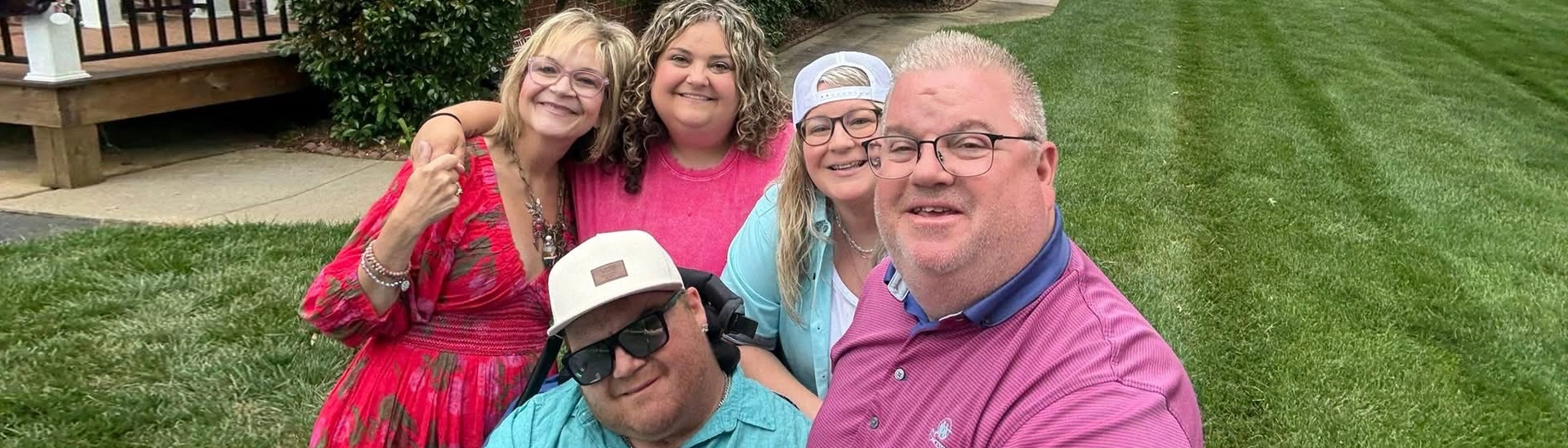
National Caregivers Day is recognized each year on the third Friday of February.
Vaya Health celebrates the family caregivers and professional caregivers whose dedication, commitment, hard work, and love lift up members of their families and communities every day of the year.
“One of my favorite quotes is ‘caregiving is an expression of love in action,’” says Rhonda Cox, Executive Vice President and Chief Operating Officer of Vaya Health. “It is not glamorous. It requires steady strength and commitment. It is the ultimate example of servant leadership.”
People often think about family caregiving in terms of infant care or elder care, or as something only for people with intellectual and developmental disabilities, traumatic brain injuries, or mental health or substance use disorders.
But anyone may need care at any time because of medical needs, physical disability or injury, or emotional or psychological needs. Sometimes that means a person needs care for a short time, such as during recovery from an accident, injury, or illness. Sometimes the need for care is longer lasting or permanent.
A person can find themselves in a caregiver role, suddenly or gradually, that can last for months, years, or the rest of their life.
When that happens, being a caregiver often becomes an essential, foundational part of a person’s life, contribution, and legacy.
That legacy is one of kindness, care, and love.
Caregivers understand that people receiving care are far more than their diagnosis or circumstance. They recognize the humanity, hopes, dreams, and possibilities of the people in their care. Caregivers strive to honor individuality, values, and preferences in activities, surroundings, and the giving of care.
For many people, being a caregiver brings both blessings and burdens. Caregiving often allows people to experience deeper empathy, commitment, love, and purpose. It can enhance a person’s sense of identity and connection.
Caregiving can also present real challenges. It can mean less care for oneself or for other loved ones besides the primary person receiving care. It can push other things aside. Care work can be hard and relentless.
At Vaya, we celebrate the professional caregivers who choose to make caring for others their livelihood, professional purpose, and vocation. We also recognize people who care for family members and loved ones. We celebrate you and we support you.
This year for National Caregivers Day, we are pleased to share caregiving stories from two families.
Caregiver profile: Lina Olarte
Lina Olarte is a mother of two. She lives with her husband and sons in Columbus, North Carolina.
Her oldest child, Alejandro, is 16 years old. He was diagnosed with autism at 18 months after an evaluation by the TEACCH program. He attends Polk County High School in a self-contained Exceptional Children, or special education, classroom.
“Alejandro has severe autism and microcephaly,” Lina says. “He is nonverbal. He depends almost entirely on me for his daily care. He is not toilet trained and does not understand many everyday dangers, such as fire or traffic when crossing the street.”
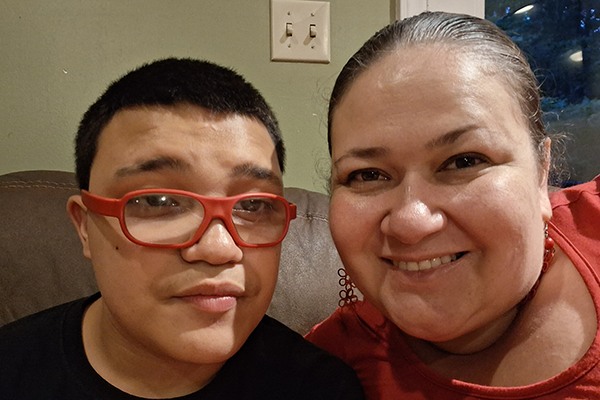
Lina says Alejandro finds joy in simple but meaningful things, including going for walks, listening to music, and spending time with his family.
Alejandro also has behavioral issues that can be challenging for Lina and the family.
“Because he cannot communicate his needs and feelings, he often becomes frustrated,” Lina says. “At times this frustration turns into aggressive behaviors.”
Caregiving for Alejandro is a central part of Lina’s life.
“Being Alejandro’s mother and full-time caregiver has changed me deeply,” she says. “This journey has taught me patience, unconditional love, and a strength I never knew I had.”
Alejandro is on the waitlist for the Innovations Waiver and now receives 1915(i) Medicaid services. He receives applied behavior analysis (ABA) therapy in the home four times each week and speech therapy once a week.
“He uses a communication device, and with the help of his therapists and school staff, he is slowly learning how to express himself,” Lina says. “Seeing him make progress and watching his aggressive behaviors decrease give me hope and remind me why these services are so important.”
Lina describes caring for Alejandro as an act of love, but also physically and emotionally exhausting.
“There are days when I am tired, but his needs do not pause,” Lina says. “When the weather is bad — rain, ice, or snow — or when he is out of school and his routine is disrupted, his behaviors intensify. During these times, he may pinch me, kick me, throw his toys against the walls, or hit the walls repeatedly.
“These situations are extremely difficult. At times I feel overwhelmed. But I continue because he depends on me completely.”
Columbus is a small, rural town, which Lina believes reduces the availability of home and community-based services. She says respite services would make a meaningful difference for her and her family.
“I have tried for a long time to obtain respite services, but it has been nearly impossible because of the lack of available workers and providers in our area,” she says. “It took more than a year to begin receiving ABA services.
“Respite services would allow me to rest, recover, and continue being the best caregiver I can be. They would also allow me to spend much-needed one-on-one time with my younger son, who is 12 years old and often asks to spend time alone with me. He wants us to go to the movies or simply be together without his brother. He understands that Alejandro requires most of my time and attention, but he still needs his mother, too.”
For National Caregivers Day, Lina says people can support caregivers by offering recognition, acknowledgment, and help.
“Any assistance, understanding, or support offered to our family means more than words can express,” she says.
Lina is optimistic about the future for Alejandro, herself, and her family, while recognizing the continuing need for services and support.
“I know I am fortunate to be able to care for my son,” she says. “I love both of my children deeply, and I am doing everything I can to support them. I truly believe that, with continued support, Alejandro can gain more independence over time.
“At the same time, I carry the constant hope that I will be able to stay healthy and strong enough to care for him for as long as he needs me.”
Caregiver profile: Jeannie Irby and the Irby family
Thirteen years ago, when he was 23 and working as a medical courier, Zack Irby was in a car accident.
“Zack was in a horrible car accident on the highway, and he hit the back of a tractor-trailer,” says his mother, Jeannie Irby. “Everything stopped. His original diagnosis was a severe diffuse axonal injury, and it was global. His entire brain was damaged, even the brain stem, which led to him being in a wheelchair. He’s not paralyzed. He can feel his whole body, but he’s unable to move it. It’s called spastic quadriplegia.
“Prior to his traumatic brain injury, Zack had bipolar disorder. His mental health issues worsened after the accident and after a few years turned into what’s known as psychosis secondary to traumatic brain injury.”
Zack is now 36. His life changed profoundly on the day of the accident — and so did the lives of his parents and siblings. Caregiving quickly became central to all their lives.
“A lot of people aren’t given the opportunity to be caregivers, and we are very fortunate that we have our son,” Jeannie says. “There’s a lot of joy in it. We get to take him places and experience life with him. We get to play games with him. We get to laugh with him. It’s rewarding to take care of someone who’s unable to take care of themselves.”
Zack’s father, Rick Irby, echoes that sentiment. “Probably one of my biggest joys is being able to see him 13 years later on my way out to work — versus the alternative,” Rick says. “One of the biggest joys of caregiving is to be able to see him every day and know he has a great quality of life.”
Meghan Irby, Zack’s older sister, agrees. “What’s rewarding is making him laugh and smile as much as possible,” she says. “That’s my biggest goal with Zack every day — to make sure he’s laughing and smiling.”
The family lives in Graham in Alamance County.
Rick and Jeannie say that an early challenge was accessing the services Zack needs to live with stability and meaning, while also adjusting their own lives.
“This is a life we were thrust into,” Rick says. “There’s no guide. There’s no textbook. I remember at the hospital early on they were talking about discharge and going home, and we were thinking, ‘Going home where? What will we do?’
“You have to maneuver through the system early on as a caregiver. They save his life, but then it’s up to us to maintain it. The roadmap for being a caregiver does not exist. If it weren’t for churches helping us early on, rent and bills would not have been paid.
“One of the toughest parts of being a caregiver is finding the services and finding the way.”
Through Vaya, Jeannie says Zack receives services through the Community Alternatives Program for Disabled Adults (CAP/DA), which funds personal care, supplies, equipment, and home modifications; 1915(i) Medicaid services that support respite hours, peer-to-peer services, and day programs, although Zack is not using day programs because none specialize in traumatic brain injury; and traumatic brain injury funding through a federal waiver.
Accessing these services took years.
“It was challenging for me as a mom because I was taking care of him myself,” she says. “I was running a home, paying bills, and buying groceries. He didn’t sleep for the first nine years after his injury. We were up all night and all day. It was very hard.”
Each family member experienced a major life change after Zack’s accident.
“Being Zack’s sister comes with a big responsibility,” Meghan says. “While I adore Zack, it’s also really hard sometimes. I can’t just leave or go on vacation. I have to make sure his care is covered.”
Zack’s lead paid caregiver is Danielle Hawks, who works 40 hours a week and is also on call when needed.
“It’s very stressful sometimes,” Danielle says. “You can experience extreme burnout. It can be taxing emotionally, physically, and financially, but helping someone live a good life makes it worthwhile.”
Jeannie says recruiting and retaining caregivers is difficult.
“It’s frustrating trying to find people who are committed and getting them paid enough,” she says. “Some are doing work similar to intensive care unit nurses and earning less than $20 an hour.”
Jeannie says she advocates for more robust services to be made available for people in North Carolina with traumatic brain injuries, as well as for people with other disabilities and mental health and substance use disorders. The North Carolina Traumatic Brain Injury Waiver is available in only a limited number of North Carolina counties, and Jeannie says it should be expanded to all counties, even while Zack receives services from other programs through Vaya that support people with traumatic brain injuries.
Much of the family’s journey has been rooted in their faith, she says.
On National Caregivers Day, Jeannie says she hopes people develop greater empathy for caregivers, who often experience isolation.
“I wish people understood how isolated we are,” she says. “Support often fades, and relationships change. We just need people to be there.”
Meghan says the hardest parts are often unseen.
“We share the joyful moments,” she says. “We don’t always show the difficult times. If you have friends who are caregivers, check in on them. It helps.”
Jeannie and Rick also worry about the future.
“We worry about what will happen to Zack when we’re not here,” Jeannie says.
Still, she emphasizes hope and advocacy.
“You’re not alone,” she says. “Take time for yourself each day. You matter.”